
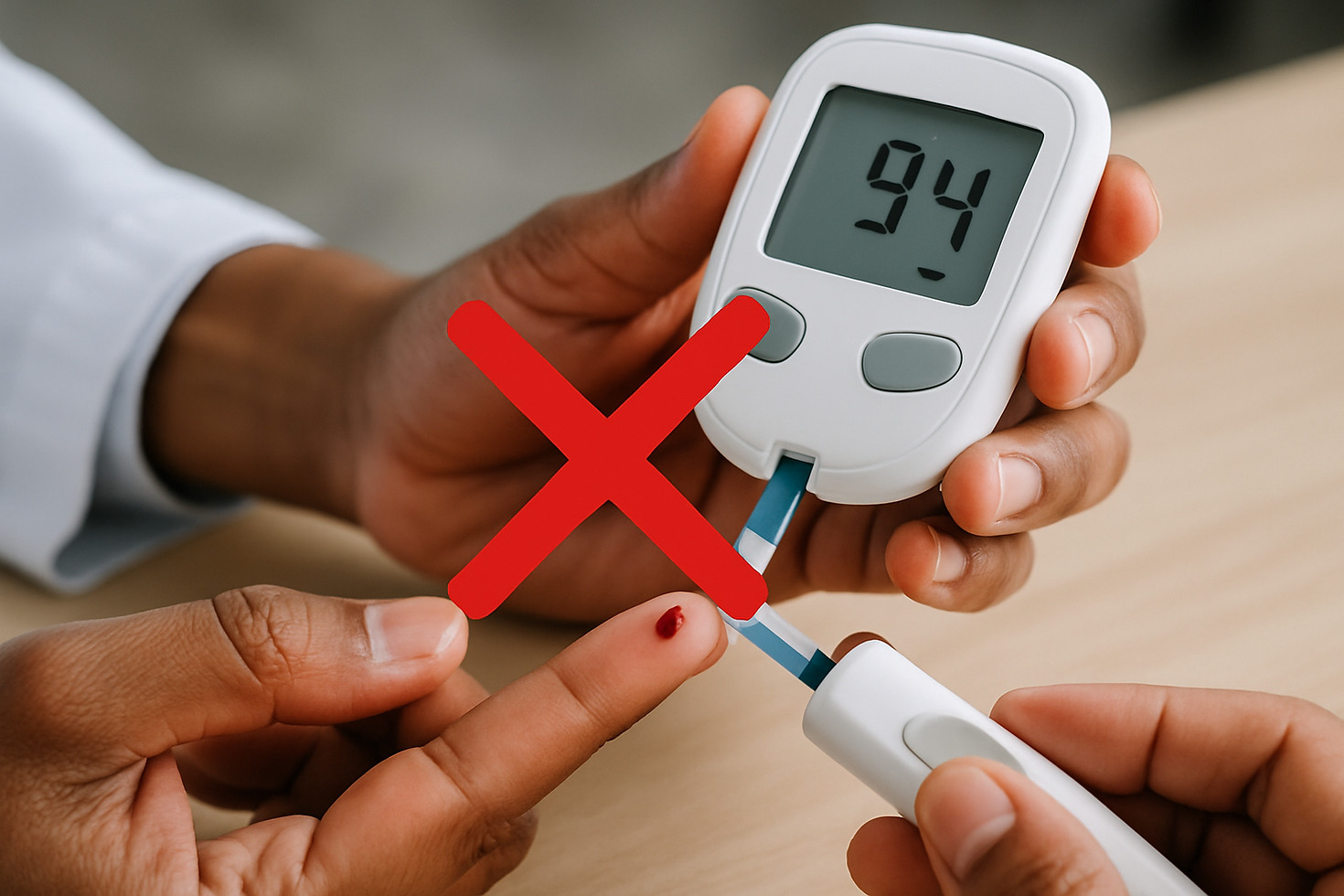
5 Mistakes People Make When Testing Their Blood Sugar

Testing your blood sugar is one of the most important things you can do to manage your diabetes — but even small mistakes can lead to inaccurate readings that throw off your entire routine. The good news is that most of these errors are easy to fix once you know what to look for. Let's walk through the five most common blood sugar testing mistakes and how to avoid them.
Mistake #1: Not Washing Your Hands Before Testing
This is the number one mistake people make, and it can dramatically affect your results. Residue from food, lotion, or even fruit juice on your fingertips can cause falsely high readings.
Always wash hands with warm soap and water before testing
Dry your hands completely — moisture can dilute the blood sample
Avoid using alcohol wipes as your only cleaning method, as they can leave residue
If you're away from home, rinse with water and dry thoroughly
Mistake #2: Using Expired or Improperly Stored Test Strips
Test strips are sensitive to heat, humidity, and light — and using expired ones is a surprisingly common blood sugar testing mistake diabetes patients overlook. Always check the expiration date on your strips before testing.
Store test strips in their original container with the lid tightly closed
Keep strips away from direct sunlight and extreme temperatures
Never store strips in the bathroom or near a window
Check the expiration date every time you open a new box
Discard any strips that have been exposed to moisture
Mistake #3: Testing at the Wrong Times
Timing matters more than most people realize when it comes to blood sugar testing. Testing randomly without a consistent schedule makes it hard to spot patterns or understand how food and activity affect your levels.
Test at consistent times each day for the most useful data
Follow your doctor's guidance on when to test — before meals, after meals, or at bedtime
Keep a log of your readings along with what you ate and your activity level
Talk to your care team if you're unsure how often you should be testing
Mistake #4: Not Calibrating or Coding Your Meter
Some blood glucose meters require calibration or coding when you open a new batch of test strips. Skipping this step can cause your meter to give readings that are consistently off. Check your meter's manual to see if this step applies to your device.
Mistake #5: Using Too Little or Too Much Blood
Getting the right size blood drop is key to an accurate reading. Too little blood may give you an error message or a false low, while too much can sometimes interfere with the test strip's chemistry.
Follow your meter's instructions for the correct blood sample size
Warm your hands before testing to improve blood flow
Use the sides of your fingertips rather than the pad for a less painful stick
If you get an error, do not add more blood to the same strip — start fresh
Consider a lancing device with adjustable depth settings for a more comfortable experience
How to Build Better Testing Habits
Making blood sugar testing a consistent, accurate part of your routine takes a little practice, but it gets easier over time. Small adjustments — like setting a daily reminder or keeping your supplies organized in one place — can make a big difference in how confident you feel managing your diabetes.
Keep all your testing supplies together in a dedicated pouch or case
Set phone reminders to test at your scheduled times
Review your readings weekly to share with your healthcare provider
Replace supplies like lancets and test strips regularly to ensure accuracy
Shop Diabetes Supplies at MDS Diabetes
Getting accurate blood sugar readings starts with having the right supplies you can count on. MDS Diabetes is here to make that easy — with a wide selection of trusted glucose meters, test strips, lancets, and more, all available at great prices. Visit mdsdiabetes.com to shop today, or give our friendly team a call at (877) 861-3571. We're proud to support you every step of your diabetes journey.
Comments